A kitchen backsplash lives a rough life. It gets hit with heat, steam, oil mist, tomato sauce splatter, and the occasional flying utensil. So when someone falls in love with the shine of glass backsplash tile, the next question is simple: will it hold up, or will it look tired in a year?
The good news is that glass can be one of the longest-lasting backsplash materials you can choose. The not-so-fun truth is that not all glass is made the same, and the details (type of glass, finish, and install method) matter as much as color.
Below are the glass options that tend to stay beautiful for the long haul, plus the practical choices that keep them that way.
What “lasting” means for a kitchen glass backsplash
Durability isn’t just about “does it crack?” A backsplash “lasts” when it keeps its look and stays easy to live with.
In real kitchens, that usually comes down to:
- Heat tolerance behind a range or cooktop
- Scratch resistance during cleaning (and from gritty sponges)
- Color stability so it doesn’t fade or shift over time
- Bond strength so tiles don’t loosen or show patchy adhesive lines
- Stain resistance, especially at grout lines
Glass checks a lot of these boxes because it’s non-porous. Most problems people blame on glass tile are actually install or grout issues.
Glass backsplash tile types that hold up best
Different glass is like different kinds of winter coats. They all block the wind, but some are built for a quick trip to the store, and others are built for a Chicago January.
Color-backed (painted) glass tile for clean, consistent color
If you want a crisp, modern look with solid color, color-backed glass is a strong pick. The color is applied to the back of the tile, and the face stays smooth and easy to wipe.
Why it lasts: the front surface is hard and non-porous, so it doesn’t soak up stains. It also reflects light well, which helps smaller kitchens feel brighter.
What to watch: the back coating needs the right adhesive. If the wrong thinset is used, you can get blotchy shadows or poor bonding. That’s why following the tile manufacturer’s install guidance matters.
Fused glass tile when you want depth (and better disguise for smudges)
Fused glass is made by heating layers of glass together. Visually, it can have more depth than standard tile, almost like looking into still water.
Why it lasts: fused glass often has a slightly more substantial feel, and many styles have subtle texture that hides fingerprints and water spots better than a mirror-gloss tile.
What to watch: texture can mean more cleanup in the tiny dips. If you cook with a lot of oil, consider a smoother fused option near the cooktop and use more textured pieces farther out.
Recycled glass tile for a “forgiving” surface and natural variation
Recycled glass tile often has gentle color movement, tiny bubbles, or speckling. That variation can be your best friend in a busy kitchen because it makes daily mess less obvious.
Why it lasts: it’s still glass, so it resists stains and water. The mixed look can also hide minor wear and smudges.
What to watch: quality varies by brand, and some recycled options can be more prone to edge chipping if the tile is thin. Ask for a sample and check the edges, especially if you’re using a bold grout color.
Cast glass tile for a thicker, more dimensional backsplash
Cast glass is thicker and more sculptural. It’s the kind of tile that makes a backsplash feel like jewelry for the kitchen.
Why it lasts: thickness helps it feel sturdy, and the dimensional face can hide little marks better than flat glossy tile.
What to watch: because it’s thicker, edges and transitions need planning (outlets, trim, and how it meets countertops). It can also be heavier, so proper substrate prep is non-negotiable.
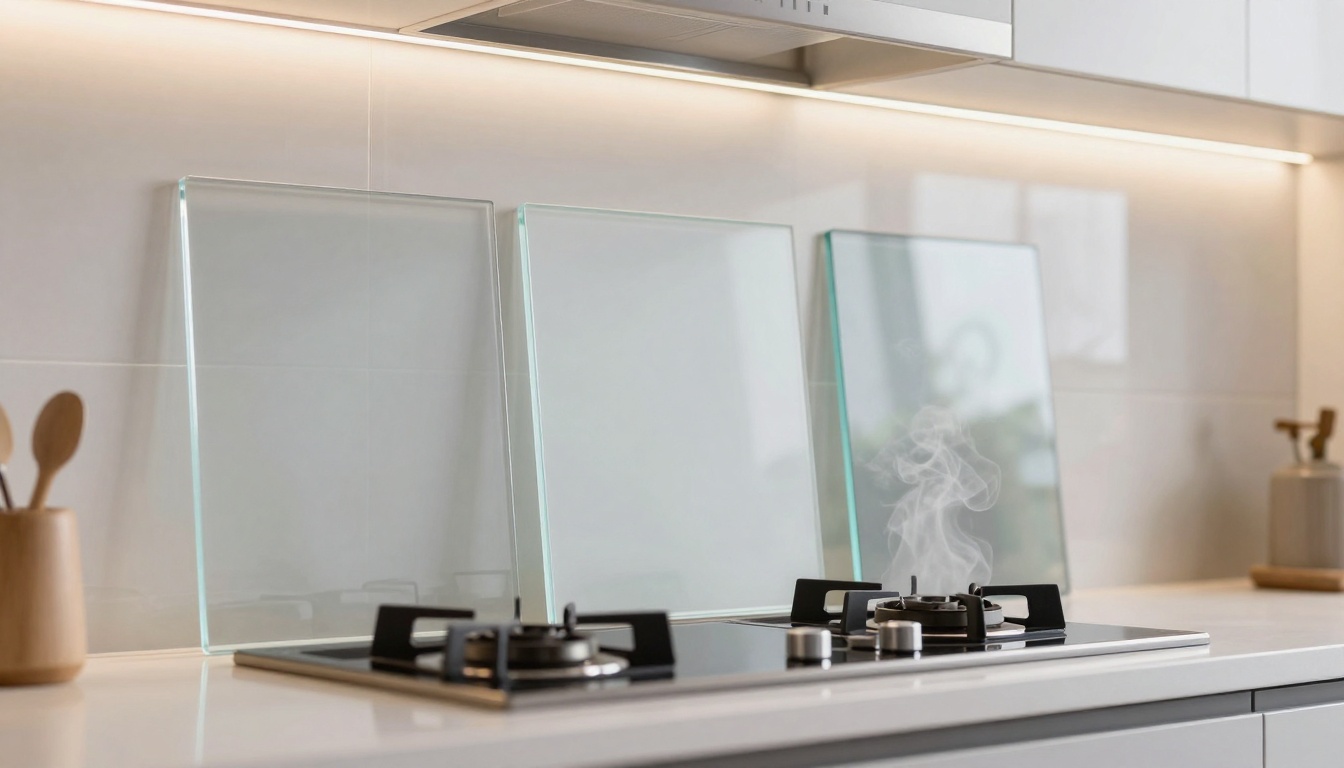
Large-format tempered glass panels (sheet glass) for minimal grout and easy cleanup
If you love the look of glass but hate grout lines, a tempered glass backsplash panel is worth considering. Instead of many tiles, you install one (or a few) custom-cut panels.
Why it lasts: fewer grout joints means fewer places for discoloration. Tempered glass is also designed to handle higher thermal stress, which matters behind ranges.
What to watch: you need precise measurement, outlet cutouts, and clean edges. For many homeowners, this is the option that feels the most “high-end,” but it’s also the least DIY-friendly.
Quick comparison: which glass type fits your kitchen best?
| Glass type | Best for | Watch-outs |
|---|---|---|
| Color-backed (painted) glass tile | Sleek, uniform color and easy wiping | Needs correct thinset to avoid shadowing |
| Fused glass tile | Rich depth, subtle texture, artisan feel | More texture can mean more detailed cleaning |
| Recycled glass tile | Softer, varied look that hides everyday mess | Quality varies, check edge durability |
| Cast glass tile | Bold dimension and luxury style | Thickness affects outlets, trim, transitions |
| Tempered glass panels | Minimal grout, fastest cleanup | Requires precise measuring and pro cutting |
Finish and edge choices that affect long-term durability
People often pick glass tile based on color, then regret the finish later.
A few practical rules of thumb:
Glossy glass looks sharp and bright, but it shows grease haze and fingerprints faster. If your kitchen gets heavy daily use, choose glossy for a small feature area, or pair it with under-cabinet lighting so it still pops when clean.
Matte or satin glass tends to look calm and hides smudges better. It can be a great fit for busy family kitchens where “perfectly polished” isn’t the daily goal.
Beveled edges add sparkle, but they can also catch grime at the tiny angle changes. Not a deal-breaker, just something to know if you want the easiest wipe-down possible.
Installation details that make glass backsplash tile last
This is where long-lasting backsplashes are won or lost. Even the best tile can look uneven if the install isn’t right.
Use the right setting materials (and keep them consistent)
Glass can be translucent, so thinset color and trowel pattern matter. A quality installer will focus on full coverage and a smooth, even bed to avoid visible ridges.
Also, glass expands and contracts with temperature changes. That’s why movement joints and proper spacing near edges help prevent future cracks.
Grout choice matters more than most people expect
Glass itself resists stains. Grout doesn’t. If you want a backsplash that stays “new-looking,” grout selection is part of the design.
- Cement grout works fine in many kitchens, but it may need sealing and occasional refresh.
- Epoxy grout costs more, but it’s highly stain-resistant and easier to keep clean over time.
Heat zones deserve extra attention
Behind a cooktop, heat and steam are constant. Tempered glass (especially in panel form) and heat-rated installation methods can reduce risk. If you’re unsure what’s safe for your exact layout, ask before tile is ordered, not after it’s on the wall.
Matching a kitchen backsplash with custom glass doors in St Charles and beyond
A backsplash doesn’t have to be a “one-off” decision. If your home already uses glass in other places (shower doors, interior doors, railings, mirrors), you can tie finishes together so the whole space feels intentional.
For example, a satin glass backsplash can echo the soft look of frosted interior glass, while a crisp clear tile can match the clean lines of modern door glass. If you’re planning upgrades across the home, it helps to work with one team that understands how different glass types behave, measure accurately, and install cleanly.
To see how tailored glass features are planned and installed, visit https://pureluxglass.com/custom-glass-door-installation/. To learn more about the people behind the work, https://pureluxglass.com/about/ is a good place to start.
Conclusion: pick the right glass, then protect it with the right choices
The best glass backsplash tile is the one that fits your cooking habits, your cleaning style, and your budget, without turning into a maintenance project. Color-backed and fused glass are great everyday performers, cast glass brings bold dimension, and tempered glass panels can be the simplest to keep spotless.
If you’re planning a kitchen backsplash (or coordinating it with other glass upgrades around Chicagoland), getting the details right early saves money and stress later. For measurements, options, and next steps, reach out here: https://pureluxglass.com/contact/. A backsplash should feel like a finish line, not another thing to worry about.